Amber, and the bread that starts every dinner
Every dinner I cook starts with bread on the table — before the first course, before anything else. How a meal begins sets the tone for everything that follows. And my bread begins with Amber.
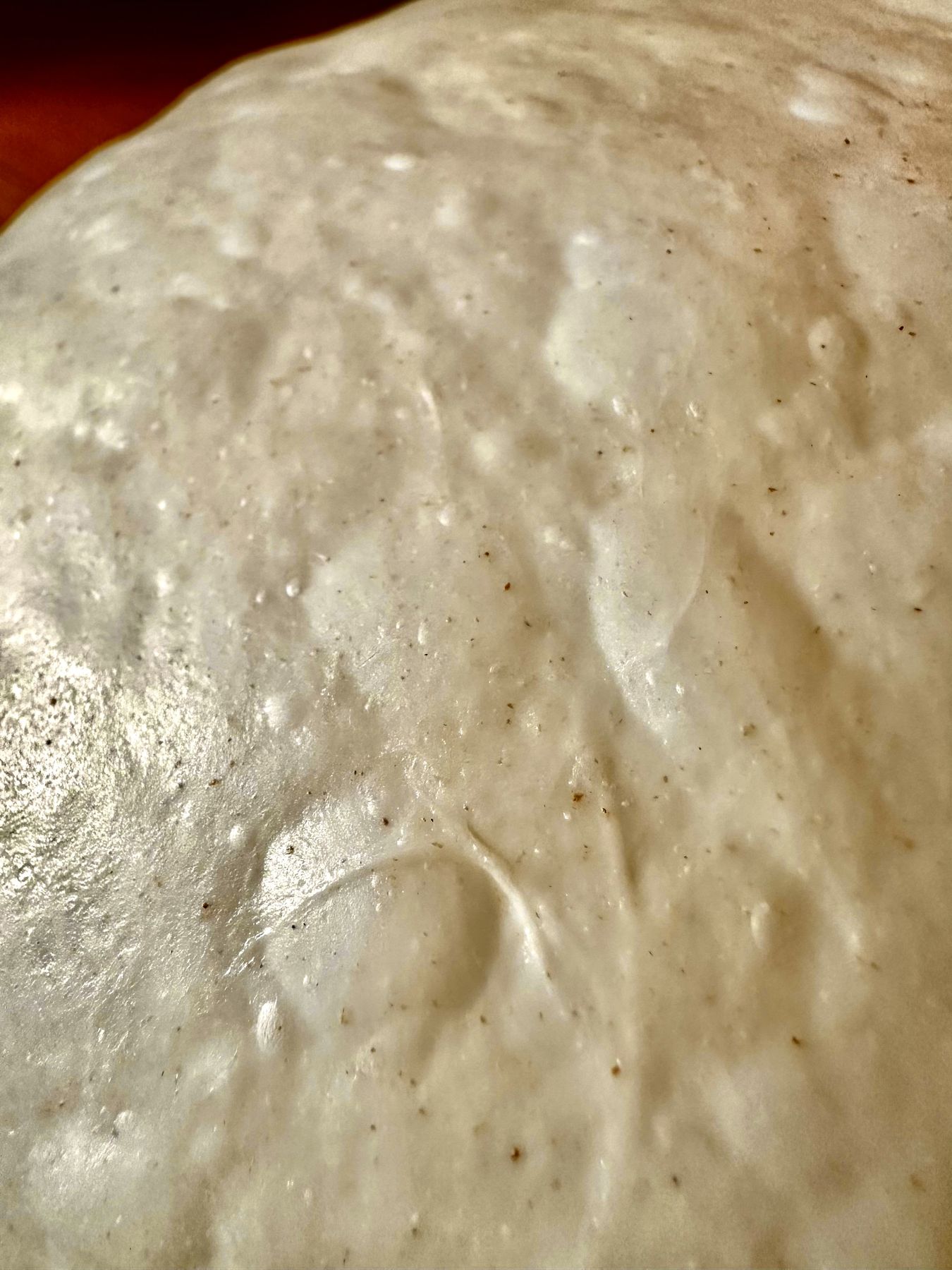
Amber is my sourdough starter. A chef friend, Marcus, gave her to me about three years ago — a little jar of living culture passed from one kitchen to another, the way starters have been shared for as long as people have baked. I’ve fed her nearly every day since. She has a personality by now: she’s fussy, she’s reliable when you treat her right, and she’s particular about her flour. She likes it high quality and nutrient-dense — give her something cheap and stripped and she sulks. Give her good flour and she rewards you.
I know how that sounds — a grown man talking about a jar of flour and water like it’s a pet. But anyone who bakes with a starter understands. You’re not following a recipe. You’re keeping something alive, and it keeps you honest.
Why sourdough, and why it matters here
In Norway, we take fermentation seriously. It’s in the culture — the curing, the pickling, the cultured dairy, the bread. Time is the ingredient. You can’t rush a starter, you can’t rush a proof, and you can’t fake the flavour that comes from leaving something alone long enough to become what it’s meant to be. That patience is the Nordic side of MeNordic as much as any single dish is.
People sometimes assume fermentation belongs to cold climates — that it’s a northern thing. It isn’t. Warmth just changes the timing. On the island, a dough that would take all night in Norway moves faster in the Menorcan heat, so I read it rather than clock-watch it. The bread tells you when it’s ready. You just have to learn its language.
Xeixa — the local flour in the blend
I don’t use one flour. I use a blend, and there’s always something local in it — usually xeixa, the heritage Menorcan wheat, grown and milled on the island. It roots the bread in Menorca the same way I root the rest of a menu in what the market has that morning. Amber gets her nutrient-dense flour, and the loaf gets a sense of place. Both of us are happy.
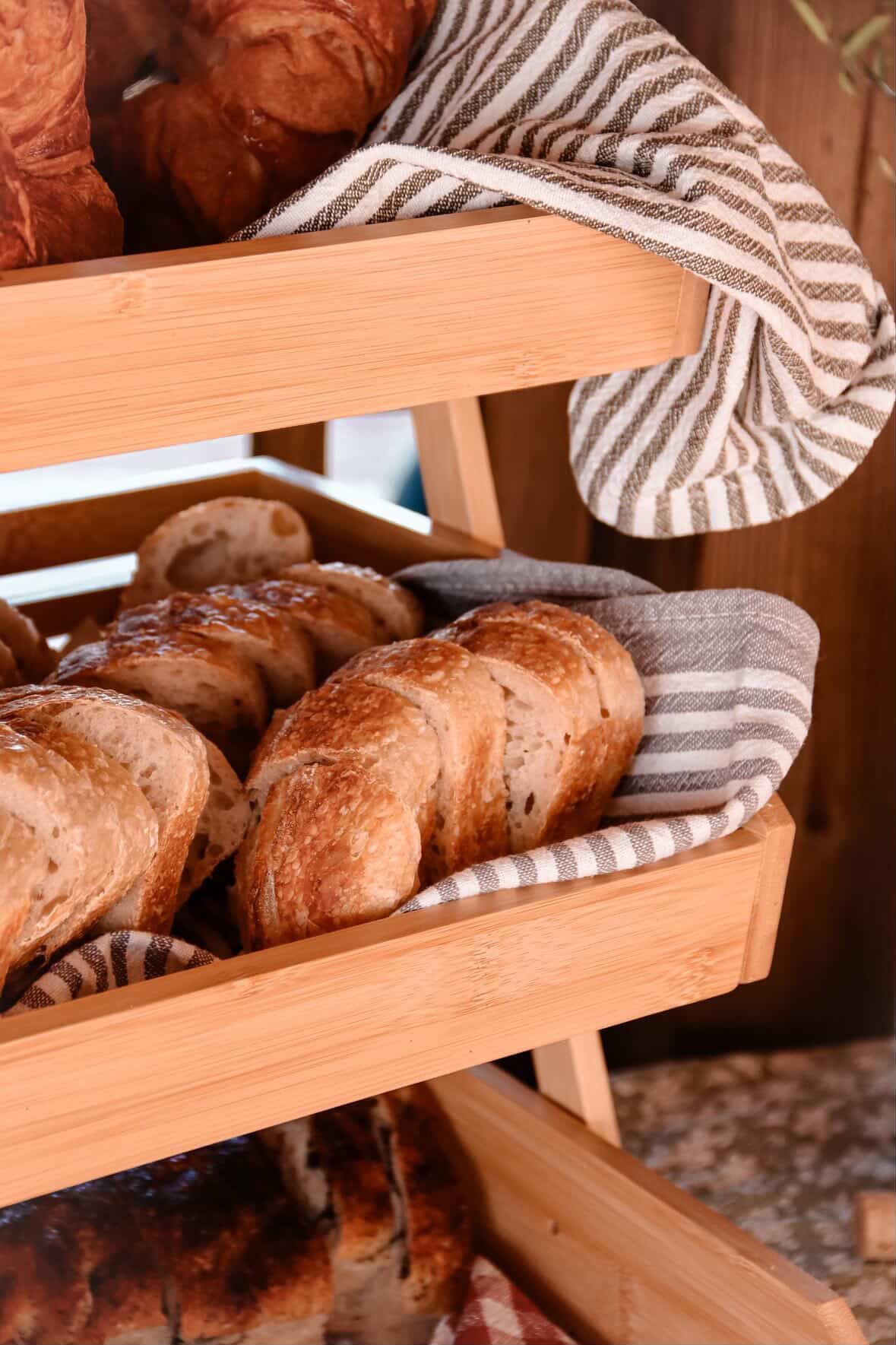
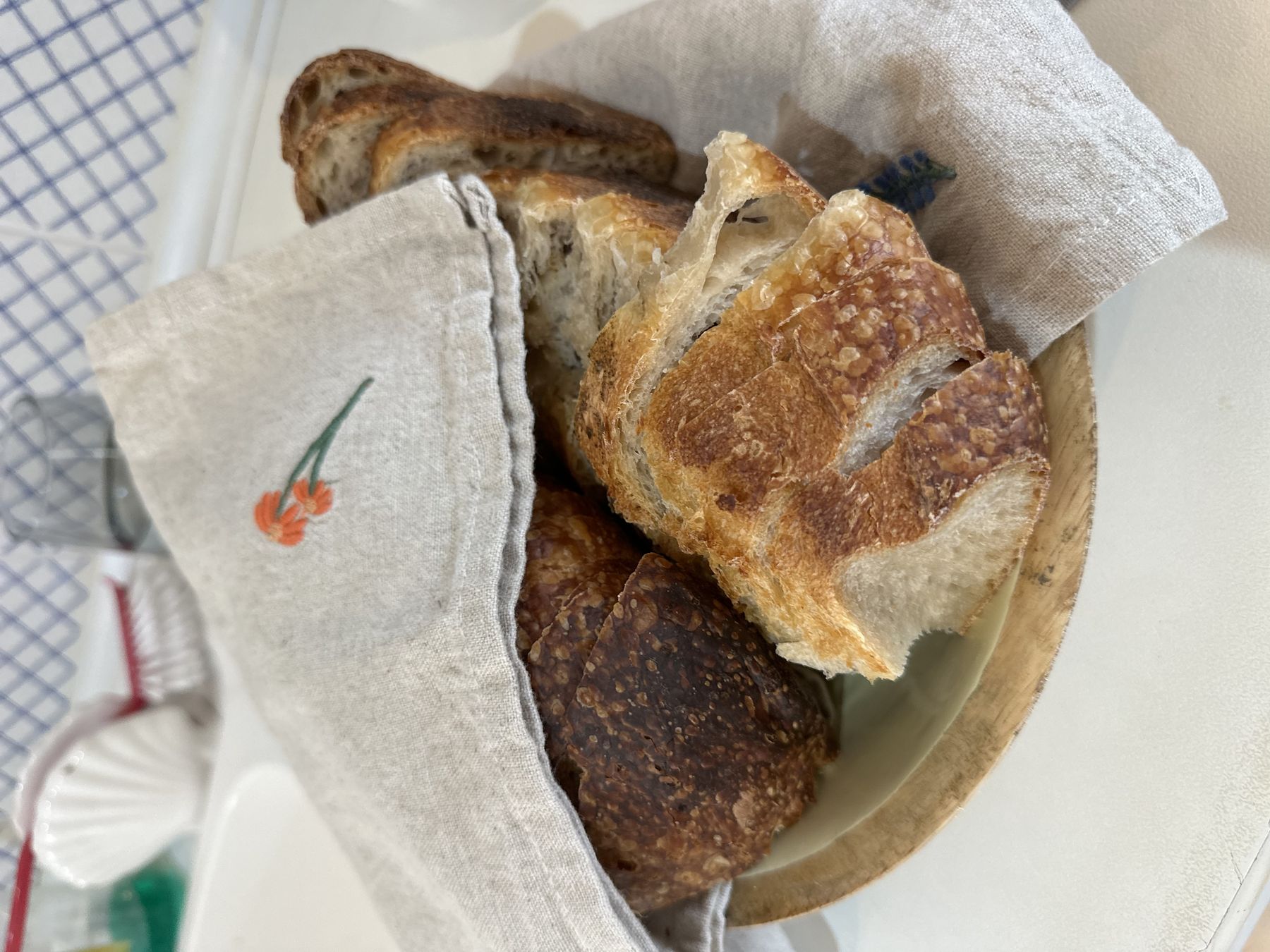
The result is a high-hydration dough, slow-fermented, baked dark in whatever oven the villa has — and no two ovens are the same, which is its own daily adventure. Blistered, deeply coloured, a little crackle as it cools. Inside, an open, tender crumb.
Bread first, always
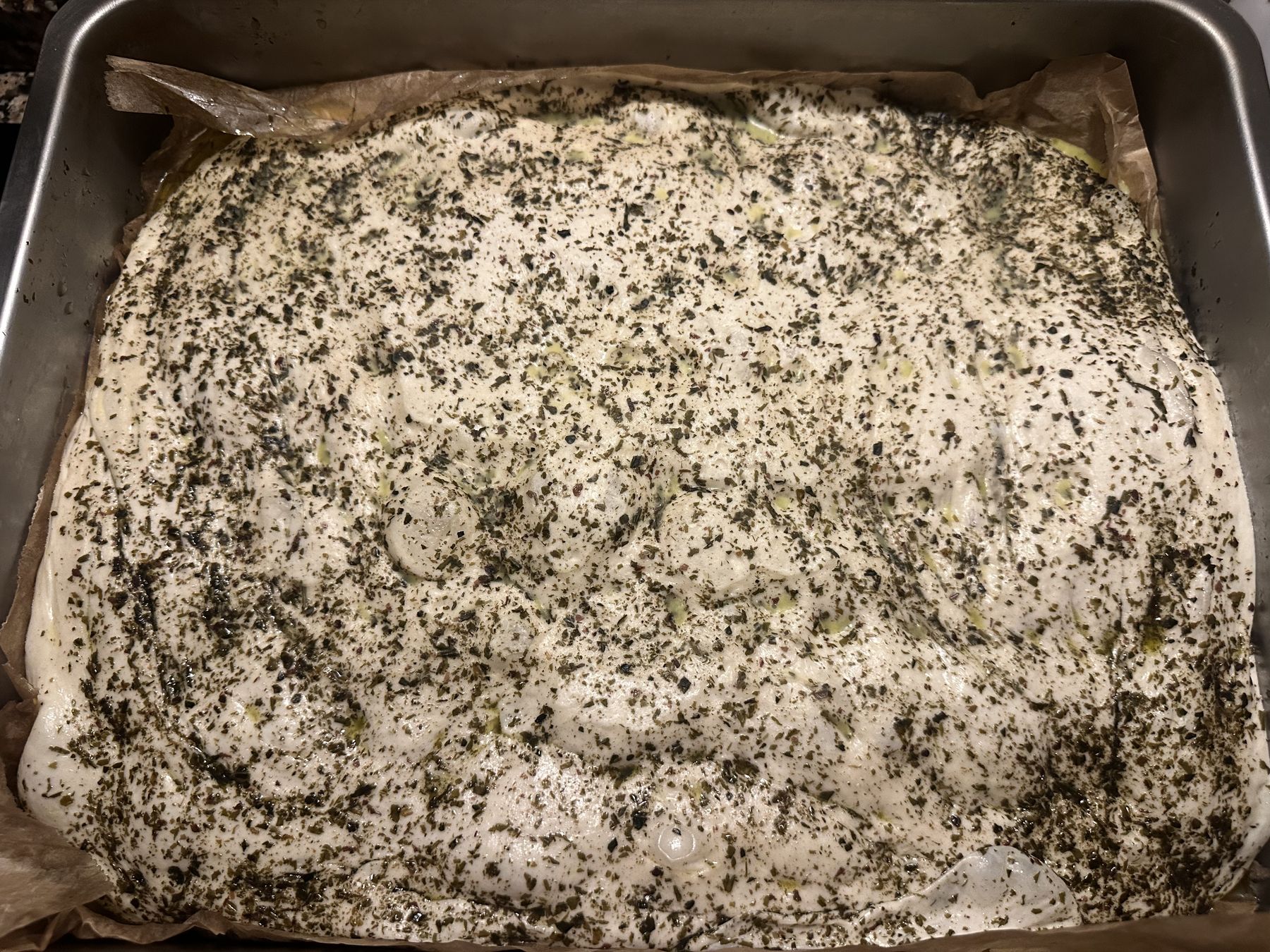
When I arrive to cook, the bread is often the thing that’s been working the longest — started the day before, proofed overnight, baked while I set up. By the time guests sit down, there’s a warm loaf on the table before they’ve ordered anything, because there’s nothing to order. Just bread, good olive oil or a basil aioli, and the beginning of an evening. There’s always bread on a MeNordic table, in some format — a boule, a seeded loaf, focaccia, a rack of Nordic buns.
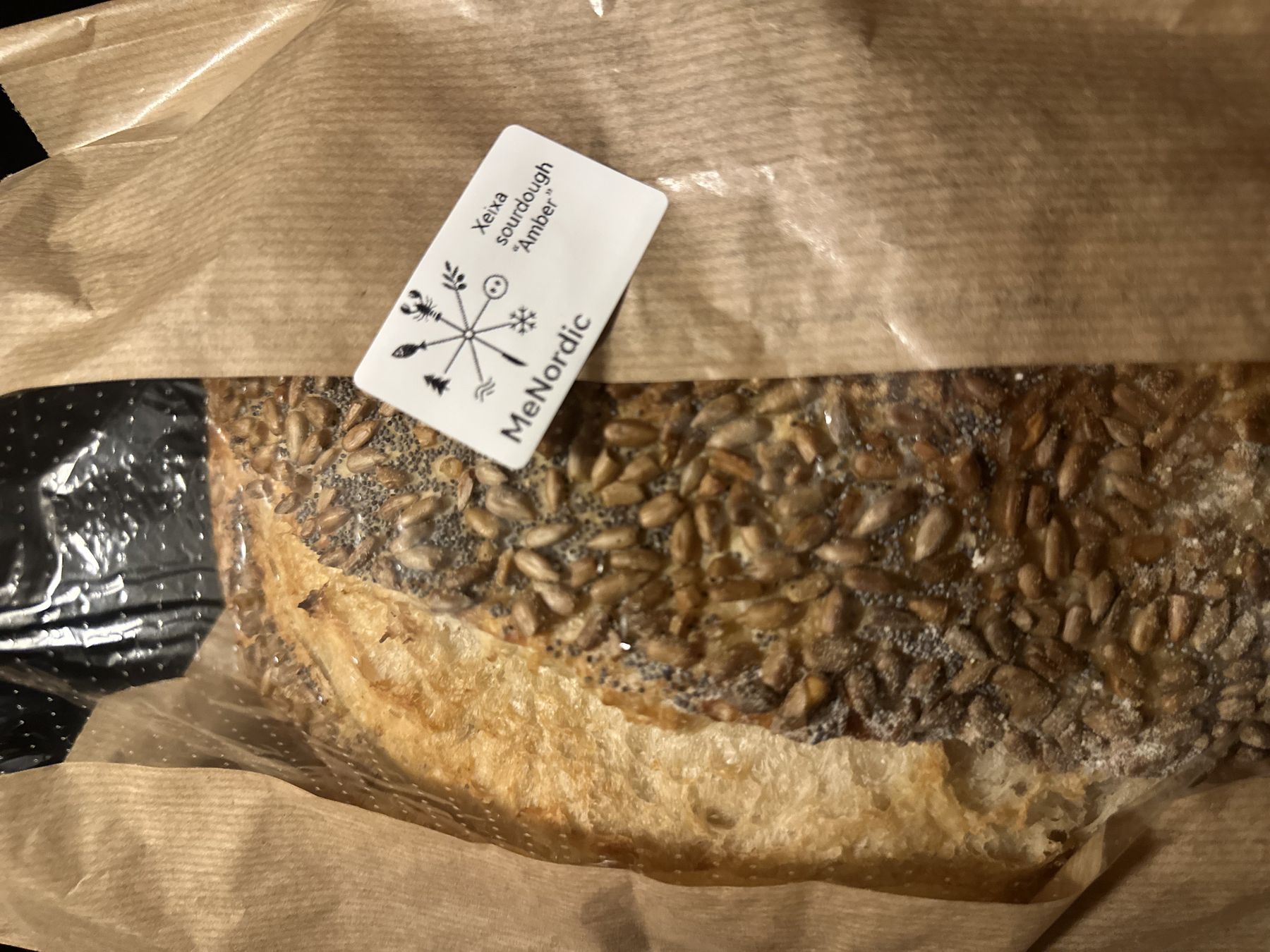
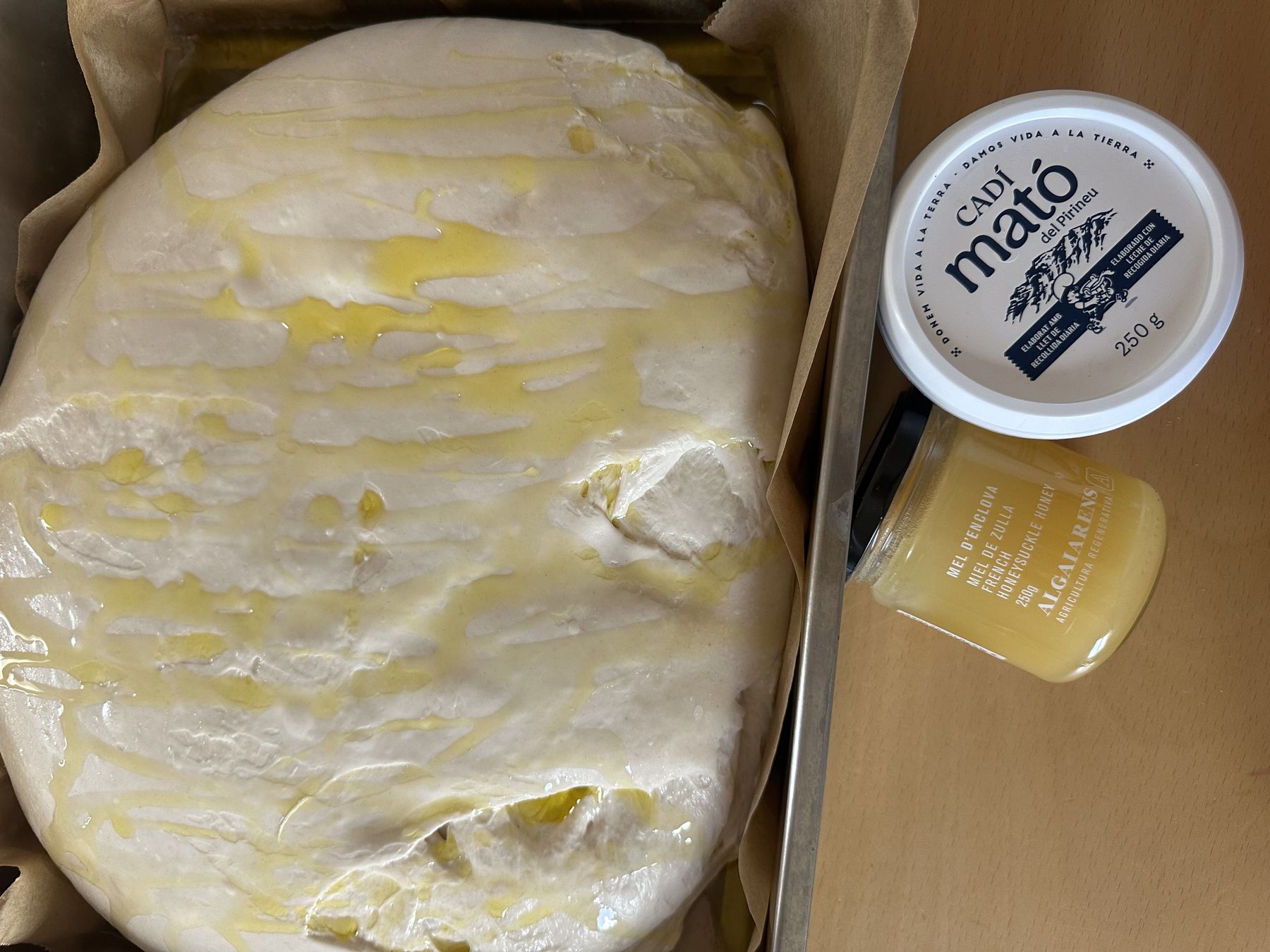
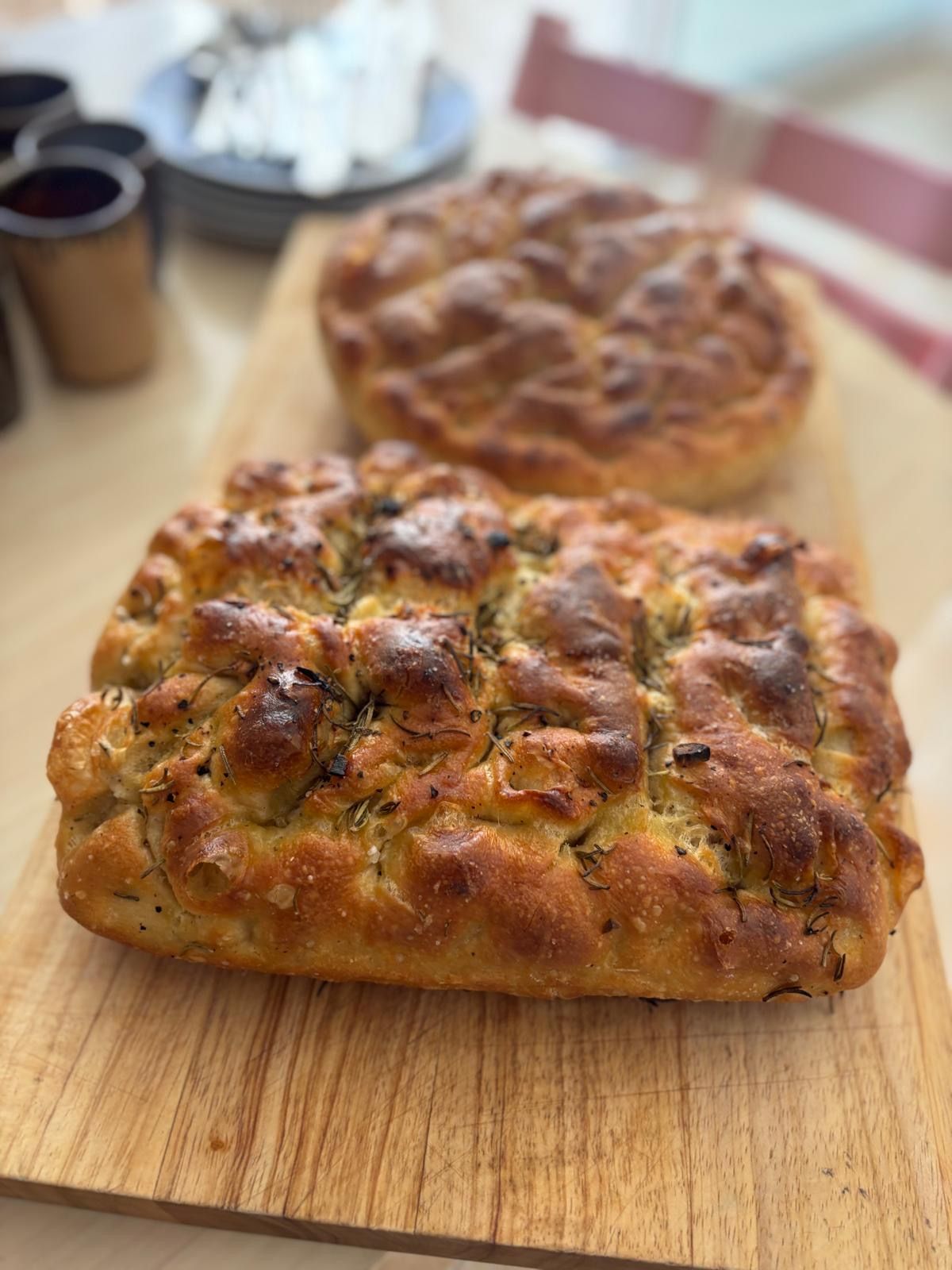
And it travels well beyond the table. When I visit friends and family, I almost always bring bread — it’s the gift that’s never wrong, and always loved. A warm loaf says more than most things you can buy.
It’s the simplest thing I make and, in a way, the most honest. No fish to hide behind, no plating to admire. Just flour, water, salt, time — and a three-year-old culture named Amber who’s particular about what she eats.
Want this bread on your table in Menorca?
Get in touch →